01
How it really began
A lot of biographies in AI are written backward. They start from the polished endpoint and then reconstruct a narrative of inevitability. That is not how it felt from inside my own life. Research, for me, did not begin as a smooth plan that moved neatly from one institution or one project to another. It felt much more improvised than that.
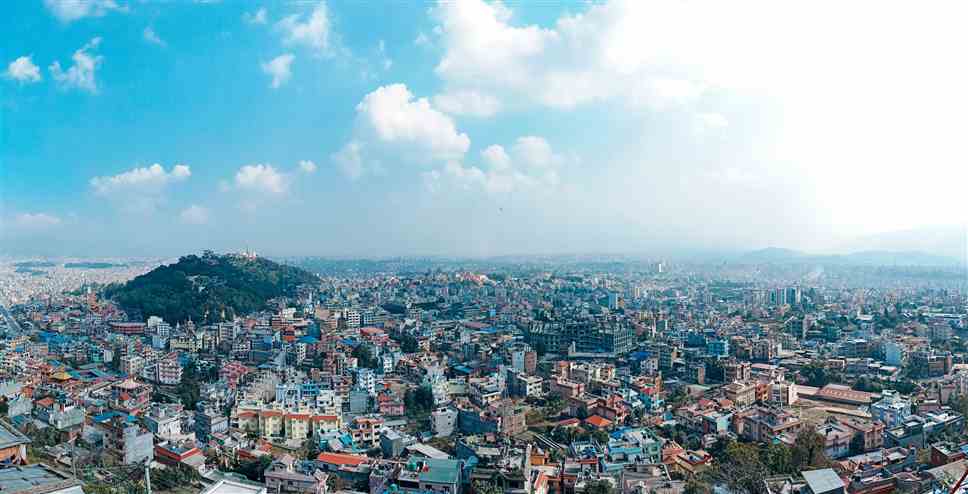
Kathmandu is part of that story in a very concrete way. I think about roads, weather, classroom schedules, deadlines, side work, family obligations, and the practical effort of creating time to read deeply. I think about learning in spaces that were not designed to flatter the idea of being a researcher. I think about trying to keep ambition intact while accepting that the conditions around me were not always generous.
That is part of why the phrase researching from Kathmandu means something specific to me. For me it is a memory of how often the work had to be protected before it could even be advanced.
I do not remember some grand reveal in which I suddenly became a researcher. I remember a slower conversion. Certain questions refused to leave me alone. Certain papers kept following me into evenings and weekends. I would carry them in my head while doing entirely unrelated things, then come back and realize the question still had energy.
The earlier version of me was mostly learning how to remain serious without external confirmation. That is harder than it sounds. It means learning not to confuse delay with failure, and not to let the absence of ideal conditions become an excuse for intellectual laziness.
02
The city never stayed outside the work
What changed my thinking over time was that the city itself kept interfering with clean theoretical assumptions. I would read papers that treated multilinguality as a scaling issue, and then I would walk back into ordinary life where language did not behave that way at all. People moved across Nepali and English. Scripts carried social meaning. Borrowed technical vocabulary sat next to local phrasing. Register changed with context, class, and purpose.
That distance between benchmark language and lived language became impossible for me to ignore. I could not convince myself that multilingual evaluation should begin with English and then be translated outward. From where I was standing, that approach already looked incomplete.
The disagreement was intellectual, but it was personal too. I knew the feeling of reading systems claims that sounded global while quietly assuming someone else's linguistic center.
Once that feeling became familiar, it started changing how I read everything. A benchmark might be statistically careful, but I would still ask whether it had mistaken convenience for universality. A model might show strong aggregate performance, but I would still want to know which language habits had been normalized in order for that success to look so stable.
Living in Kathmandu did not make me anti-theory. It made me impatient with theory that floats too far above use. I wanted the language of the paper to remember that language itself has a social life.
// Working Notes
- Language is shaped by routine, class, schooling, media, and region.
- A benchmark that begins elsewhere can miss all of that and still look rigorous.
- Place changes what feels ordinary, natural, and answerable.
- After a while, English-first evaluation stopped feeling neutral to me.
03
The practical side kept shaping my taste
I do not think enough people talk plainly about how material conditions shape research taste. If your access to compute is limited, if your time is fragmented, if your route into the literature is self-built more than institutionally handed to you, you become sensitive to different things.
I became suspicious of research that looked elegant only because it had hidden away the conditions of use. I became more interested in evaluation than in spectacle. I cared more about where a system breaks than about another incremental result inside the English center.
Looking back, I think that orientation came partly from necessity. It is hard to romanticize abstraction when the practical side of the work keeps reminding you that systems live somewhere, and that users do too.
Scarcity also teaches patience in a very specific sense. You stop expecting every week to produce something visible. You learn that progress sometimes arrives as sharper judgment, better refusal, cleaner taste, or the ability to see why a claim is weaker than it first appears.
I think that is one reason I became more drawn to evaluation work. Evaluation rewards a kind of seriousness that spectacle often avoids. It asks whether the system still deserves belief when the environment becomes less flattering.
04
The memories that stay with me are small ones
When I think about my own path, I do not first think about publication lines. I think about reading papers late after other work was done. I think about trying to write when tired and still wanting the paragraph to hold. I think about discussing ideas with people who understood the ambition even when the path was uncertain.
I think about the emotional rhythm of the work too. Some periods felt expansive. A new collaboration would start, or a project would suddenly click, or a result would tell me I was asking the right question. Other periods felt narrow and repetitive, when progress seemed to depend on continuing before confidence had caught up.
Those are ordinary experiences, but I think they matter. They are part of why I do not like research writing that hides the life around the work. For many of us, the work is not happening in ideal conditions. It is happening because we keep returning to it.
There were also very ordinary forms of discouragement. Looking at stronger institutions and wondering what kinds of ease they took for granted. Feeling the mismatch between the scale of the field and the scale of my own immediate environment. Trying not to let comparison become paralysis.
I do not think those memories weaken the story. I think they make it truer. If a page about research has no memory of uncertainty in it, I usually take it less seriously.
05
The questions Kathmandu sharpened
What Kathmandu changed most was my method. It made me ask different questions. Whose language habits are being normalized? Which assumptions are being imported without inspection? What does a benchmark hide when it begins from convenience rather than lived use?
Because of that, so much of my work keeps returning to multilingual evaluation, cultural representation, and low-resource contexts. I do not experience those as side topics. They are the most direct route I know toward making system claims more careful.
If I had come into research through a different environment, maybe I would have cared first about a different set of problems. But this is the path I had, and I am grateful for what it sharpened.
It sharpened my suspicion of average-case stories. It sharpened my concern with who gets flattened into edge cases. It sharpened my feeling that multilinguality should not be treated as a decorative extension to an English-centered method.
The older I get, the more I think that place silently edits a person's research agenda. It changes which shortcuts look harmless and which ones start to feel impossible to excuse.
06
What place leaves behind in a person's method
When people say that research should be objective, they sometimes imagine that place should disappear from it. I no longer believe that. Place does not have to reduce rigor. Sometimes it is what rescues rigor from false neutrality.
Working from Kathmandu made me test whether a claim could survive being looked at from outside the comfort zone that produced it. That remains one of the most useful habits I have.
So if this essay sounds more personal than technical, that is partly the point. Some of the most technical instincts I have were born from ordinary life rather than formal theory. They came from seeing where existing abstractions stopped fitting the world around me.
// Closing Thought
Kathmandu shaped my research taste in a very specific way: I take a claim more seriously when it still makes sense far from the settings that made it sound easy.